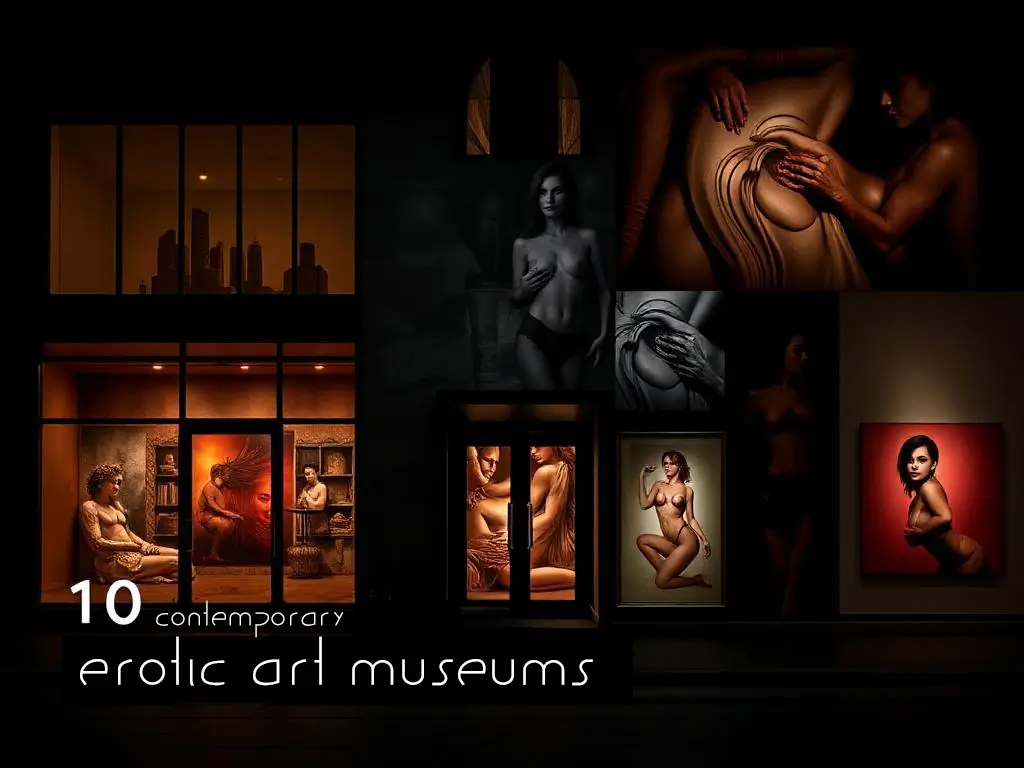

Ten museums, thousands of years of desire, and one question we still haven’t learned to answer.
I’ve spent more than thirty years photographing the human body, and one thing continues to fascinate me: the remarkable ability of society to admire nudity in a museum while treating it as a problem everywhere else.
Put a naked figure on a marble pedestal, give it a respectable date and a little brass plaque, and suddenly everyone becomes an art historian.
Put that same body in front of a camera, and somebody starts looking for the emergency exit.
Apparently, a few centuries of aging can do wonders for respectability.
But erotic art has never been particularly interested in behaving itself.
Long before photography, before cinema, before anyone invented the internet or the conveniently ambiguous phrase community standards, artists were exploring desire, intimacy, fertility, pleasure, and the extraordinary complications of being human.
And they weren’t always subtle about it.
When Desire Becomes History
What interests me about erotic art museums isn’t simply what they exhibit. It’s what happens when an object moves from private fascination into public culture.
A sculpture that might provoke embarrassment in someone’s living room becomes an archaeological treasure behind glass.
A photograph that might be considered provocative in a magazine becomes an important cultural document when a curator places it in an exhibition.
The object hasn’t changed.
The context has.
And context, as every photographer should know, can change almost everything.
That doesn’t mean every erotic image is automatically great art. Far from it. I’ve seen enough terrible photographs in my lifetime to know that nudity is no substitute for imagination.
But neither is modesty a qualification for artistic merit.
Ten Different Ways to Look at Eroticism
While researching erotic art museums and galleries around the world, I became interested in how differently institutions approach essentially the same subject.
Amsterdam’s Venustempel Sexmuseum treats erotic history with a mixture of curiosity, popular culture, and humor.
Prague’s Sex Machines Museum approaches sexuality through objects, invention, and the sometimes wonderfully absurd relationship between technology and human desire.
Barcelona’s Museu de l’Eròtica connects erotic imagery with artistic traditions and cultural history.
New York’s Museum of Sex brings contemporary exhibitions, photography, and public conversations into the equation.
And in Lima, Peru, the Museo Larco presents ancient erotic ceramics that remind us that our ancestors were considerably less innocent than we sometimes pretend.
These places don’t all share the same philosophy. Some emphasize historical preservation. Others embrace entertainment, scholarship, provocation, or outright spectacle.
I find that diversity fascinating.
Because eroticism has never belonged to a single artistic movement, culture, or century.
It belongs to humanity.
The Museum Doesn’t Make the Art
Here’s where I become a little less diplomatic.
I don’t believe a museum makes something art.
A museum can preserve it, contextualize it, explain it, and introduce it to people who might otherwise never encounter it.
But the artistic intention has to exist before the museum opens its doors.
I’ve always believed that the difference between an ordinary photograph and an extraordinary one has very little to do with how much skin appears in the frame.
It has to do with what the photographer understands about the person standing in front of the lens.
Desire isn’t created by removing clothing.
Sometimes it’s created by a glance, a gesture, a hesitation, or the space between two people who haven’t touched yet.
The most interesting erotic images leave something for the imagination to finish.
And no museum label can manufacture that.
A Different Kind of Travel Guide
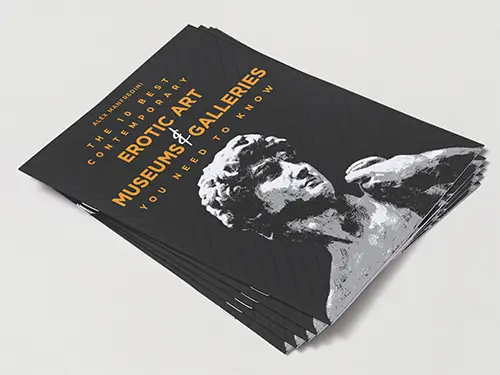
That curiosity led me to put together a 36-page illustrated guide exploring ten erotic art museums and collections around the world.
It’s not a ranking of which museum has the most provocative exhibits. That would be a rather ridiculous competition, although I suspect someone would happily organize it.
Instead, I wanted to look at how different cultures collect, preserve, interpret, and exhibit erotic imagery.
The guide includes historical context, representative works, curatorial observations, and practical information for anyone interested in exploring these institutions.
It’s written for photographers, artists, collectors, travelers, and anyone who believes curiosity is a considerably better companion than embarrassment.
And I’m making it available free to SENSUALIST readers.
Curiosity Looks Better on Everyone
I don’t expect erotic art museums to settle the endless arguments about art, pornography, censorship, or public morality.
Frankly, I’d be disappointed if they did.
Art becomes much less interesting when everybody agrees about it.
But I do think these institutions offer something valuable: the opportunity to look at human desire without immediately demanding that it justify its existence.
Sometimes a sculpture is historical evidence.
Sometimes a photograph is a cultural statement.
Sometimes an exhibition is deliberately outrageous.
And sometimes a visitor simply discovers that people were having the same wonderfully complicated thoughts thousands of years ago.
Perhaps we’ve evolved less than we like to imagine.
Or perhaps desire has always been one of the few things that makes us unmistakably human.
Either way, I think it’s worth a closer look.
Alex Manfredini
A LITTLE MORE CURIOSITY?
The 10 Best Contemporary Erotic Art Museums & Galleries You Need to Know
My free 36-page illustrated guide explores ten institutions around the world, their collections, cultural significance, and what photographers and artists can learn from them.
Free download · PDF · For adults 18+